A Talmudic story tells of a man who walks past a house of study and wishes to convert to Judaism upon overhearing a single passage of the Torah. What could provoke such a hasty commitment? The inspiring verse was that which describes the elaborate dress of the High Priest, the Kohen Gadol. The High Priest is perhaps the only person who is biblically mandated to dress flamboyantly. His Yom Kippur uniform includes a gold tunic, crown, turban and bejeweled breastplate. Today our relationship to the Kohen Gadol is confined to the Yom Kippur liturgy, which recites the arcane ceremonies the High Priest would perform in the Temple. That part of the Yom Kippur prayerbook has always been boring to me, until pop-star Ishay Ribo infused it with life with his wonderful song, Seder HaAvoda. Ribo exalts the Kohen Gadol, but to me the marvel is in how the High Priest is humanized. According to tradition, the Kohen Gadol's sacred duties determine the fate of the nation, even the world. But he's also just a man, who must wash, get dressed for work and perform a stressful and dangerous job.
I have a confession to make. For most of this war I did not keep the hostages in my heart. It was too painful to consider their fate. I assumed they were gone and never coming back. This was an emotional defense mechanism. I know my grandmother survived Auschwitz, but when I imagined myself in the place of the hostages, it scared me that I didn't think I would be the kind of person who would survive. Maybe, just possibly, as a prisoner in a house, like Noa Argamani. But not in the tunnels. A literal pit of destruction, without light, without air, without day and night itself. I wouldn't make it far.
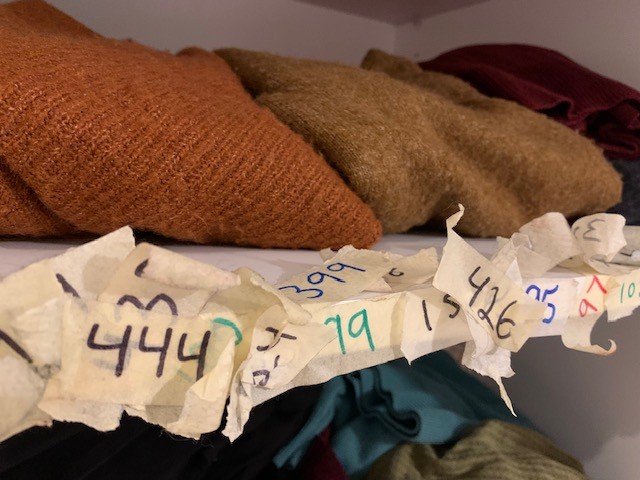
My wife was the opposite. In those chaotic early days she learned that her coworker and friend's son, Hersh, had been taken captive into Gaza. In response she diligently taped the number of days on her clothes, attended hostage rallies in Jerusalem and Tel Aviv, spread word of the hostages overseas to those who would listen and those who wouldn't.
I was jolted out of my avoidance when in April a propaganda video showed that Hersh was still alive, amplifying both the hope and the fear. From that point on I cried whenever I heard the verse from Ribo's Seder HaAvodah:
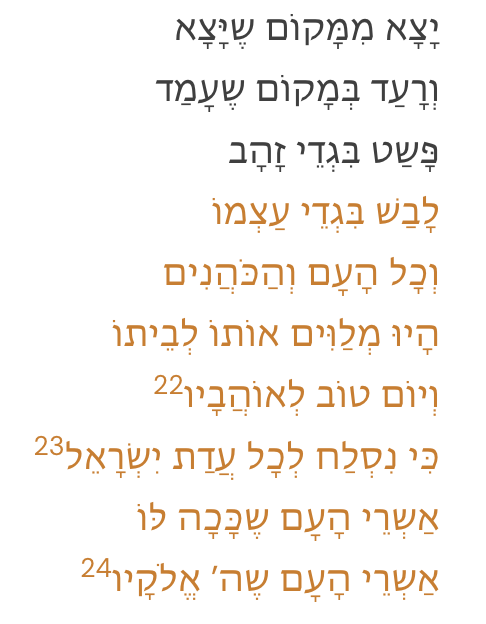
This was the joyful return I imagined for Hersh, escorted through the streets of our shared hometown surrounded by the crowds of those who loved him and those who longed for him. That with his return we could, in some imperfect way, achieve a level of expiation as a nation for abandoning so many on October 7.
The Kohen Gadol's return is both a relief and triumph. His face "like bolts of lightning radiating from the splendor of the angels." We, unfortunately, have only Rachel weeping for her children, nine measures of suffering, and sometimes, an inspiring song to guide us to atonement.