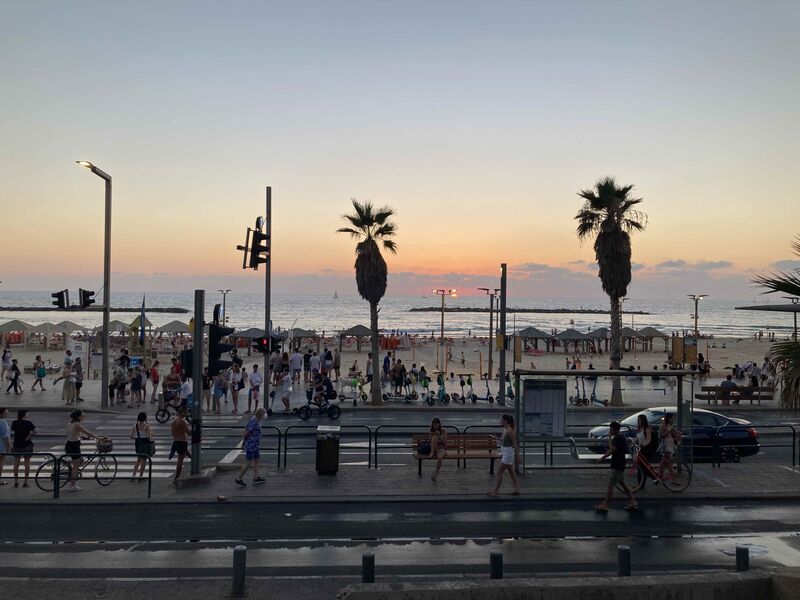
The sticky summer heat in Tel Aviv makes you long for a shower. Once you step away from the breeze of the Mediterranean, even by a couple of blocks, it's a humid sweaty mess. No matter how late one is up in the so-called 'city that never sleeps,' the thickness of the air and the drone of air conditioners does not abate. But while the coastal heat evokes disgust, Jerusalem heat evokes fear. A baking desert heat. It's the heat of Hagar wandering in the desert, of Jonah weeping over the Kikayon plant. The fear that "if I don't find shelter, I might die." This week Jews celebrated the festival of Sukkot where according to tradition we dwell in outdoor booths with ceilings made of tree branches and leaves. Among the basic religious requirements is that "its shade exceeds its sun." Without refuge from the sun, our booth does not even count as a temporary dwelling.
A number of recent studies have suggested that the Middle East is warming around twice as fast as the rest of the world. This will increase water scarcity, put pressure on food systems, and create climate refugees. Israel has developed some resilience to climate change when it comes to water, leading the world in water recycling, and continuing to develop its desalination capacity. Yet environmental problems do not respect international borders, disputed or otherwise. A change in rainfall in Lebanon can affect water consumption for Jordanian farms, even though the two countries don't share a border. Dust storms from Saudi Arabia can choke Tel Aviv. Environmental problems also tend to have ways of becoming societal problems. I'll leave it to others to debate the role of climate change in fomenting the civil war in Syria, or if there's any relationship between the seasons and rocket attacks in Israel (do hotter heads make hotheads?) Either way, future climate disruption will exacerbate existing tensions both domestic and international. And while the Middle East is a relatively small player in direct emissions, the region is a nexus of the global fossil fuel business. It's not just oil backed royals in the Saudi peninsula — even Israel is a (very minor) natural gas exporter.
Yet optimists might point to a flourishing climate-tech startup scene based in Tel Aviv, cooperation between Israeli, Palestinian and Jordanian environmental organizations that has lead to shared wins, or that environmental challenges are actually helping to bring Israel and Turkey closer together. To some extent, changes in regional climate, and the scarcity it will create, are already baked in. Thankfully, at least on climate, a scarcity mindset hasn't yet.