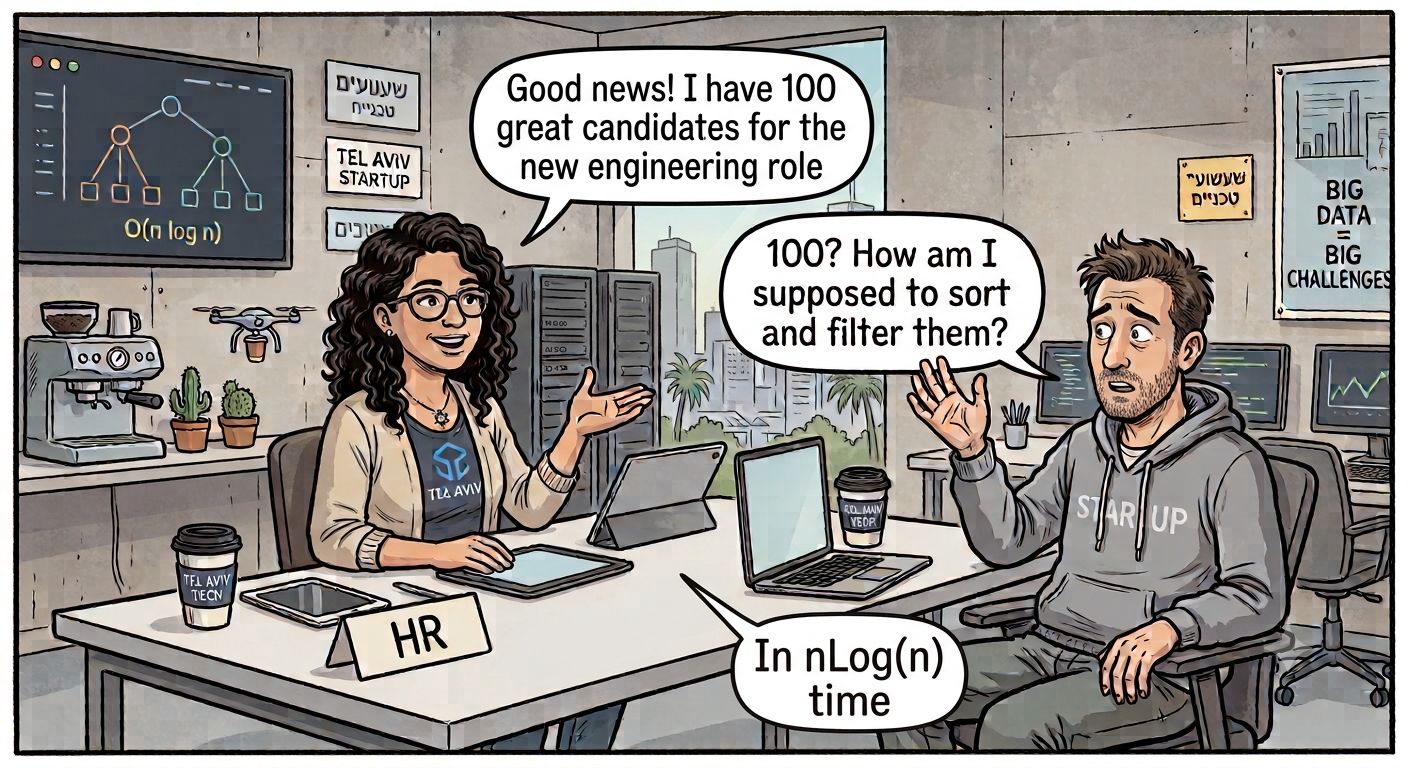
I'm vocal in critiquing hiring processes, so it's only fair to call out when someone gets it right.
I consider hiring "the last great unsolved sorting problem in computer science." I think we, and I'm including most tech companies in the 'we,' have room for improvement. We've long assessed candidates on solving puzzles that we know are irrelevant to the daily work of most engineers. AI has only exacerbated the problem. Companies are seeking AI abilities, but few know how to assess them in a candidate. And of course, the companies most in need of AI expertise will be the least adept at identifying those skills. I'm not claiming that finding the ideal candidate is simple. It's not; that's a topic for another post. However, there are aspects of the hiring process which are easy to get right, because all they require is clear communication.
An example of getting it right
Here is where I want to point to Unipaas as one of the best examples of clear communication in hiring. They are really clear as to who they are, what they are looking for, and how they find the right people. I want to highlight the extreme clarity on the hiring process.
There are six stages, last of which is optional.
- 30m Recruiter screen: video
- 60m Hiring manager interview: video
- 60m Payments system design: onsite with two engineers
- 3h Hands-on build with AI agents: onsite with two engineers
- Reference checks by Hiring manager: phone
- Optional 60m Meet the founders: onsite
Notice how each step is 100% clear as to the time, location, person and modality. Their site goes further giving details about each stage, as well as seven dimensions being measured at each stage, such as "Product taste: Can you tell what is worth building?", well as info on their engineering and hiring philosophies.
Clarity and substance are two different things
I want to highlight two distinct aspects of the process: the clarity, and the substance, because it's possible to have one without the other. I happen to strongly align with the Unipaas worldview of engineering. But we can just as easily imagine a company that has an opposing philosophy, yet still scores high marks for transparency. A different company might say: we value service in 8200 and mastery of array sorting algorithms, and our interviews primarily consist of a 60m discussion of military service and shared contacts, plus 90m of LeetCode questions. While I might personally not like those criteria, the clarity is still praiseworthy and a useful signal for both the company and candidates. The upfront transparency acts as a filtering mechanism so that neither party wastes their time.
The clarity aspect is truly accessible to all companies. I'd argue that if your hiring methods are more "traditional," that's all the more reason to be transparent about your processes. Unipaas just happens to also be exceptional on the substance. A cynic might claim: "they just got AI to write their engineering principles," but I would be highly skeptical of that take.
Judgement is the job
Having spoken to dozens of tech companies over the past few months, each in its own stage of transition into the world of AI (and not always self-aware of where they might be on that journey), Unipaas reads like a company underwent that transition humbly and a distilled a solid foundation for how to move forward. It can be unnerving to come to the conclusion that the execution aspect of coding is gone from human hands and is not coming back. That's when you realize that judgement is the job, and ownership and adaptability matter more than expertise in a specific syntax.
Hiring inefficiency is capital inefficiency, both at a company level and an ecosystem level. Let's get the easy parts right.
It's not all roses
Ironically, Unipaas's hiring page had a bug that I first thought was an Easter Egg to filter candidates (fun), but turned out to be just… a bug (and the kind of thing my automated AI QA would have caught. Let's talk.)